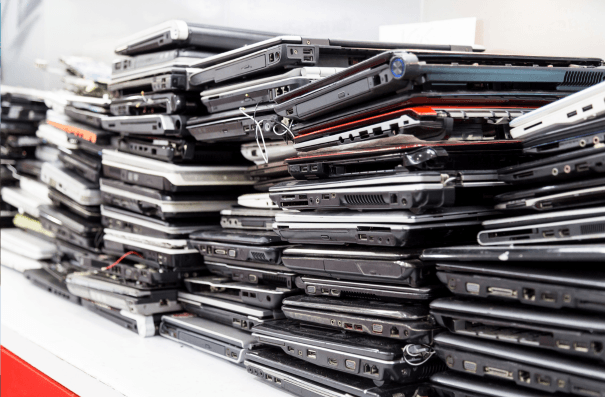




Protecting patient information, meeting privacy requirements, and recovering value from retired technology are three key challenges healthcare organizations face when disposing of IT equipment. Without a structured process, outdated computers, storage devices, and other equipment can expose sensitive data, create compliance risks, and result in missed financial recovery opportunities.
IT asset disposition provides a systematic approach to managing these risks while identifying opportunities to reuse, refurbish, or responsibly recycle retired equipment. For Canadian hospitals, clinics, diagnostic centres, and healthcare networks, the goal is to ensure that every asset is handled securely, documented appropriately, and directed toward its most suitable next stage.
This guide explains how Canadian healthcare organizations can protect sensitive information, address applicable privacy requirements, and recover value from retired IT equipment while supporting responsible technology lifecycle management.
What Is IT Asset Disposition in Healthcare?
IT asset disposition is the process of managing technology that an organization no longer needs. Depending on the equipment's condition, security requirements, and remaining market value, the process may involve redeployment, refurbishment, resale, component recovery, recycling, or destruction.
In healthcare, ITAD requires particular attention because retired devices may contain sensitive patient information, employee records, financial data, or credentials that could provide access to clinical systems.
Common assets requiring disposition include:
- Desktop computers and laptops used by clinical and administrative staff.
- Smartphones, tablets, and mobile workstations.
- Servers, storage devices, and networking equipment.
- Printers, multifunction devices, and other equipment with internal storage.
- Retired IT peripherals and eligible technology used in healthcare facilities.
Some medical devices also store patient information or connect to clinical networks. Their retirement may require coordination among IT, biomedical engineering, clinical operations, privacy, and security teams.
The appropriate disposition method depends on the asset, its data storage capabilities, its condition, and the organization's operational and regulatory requirements.
Why Is Secure ITAD Important for Canadian Healthcare Organizations?
Healthcare organizations manage information that can be highly sensitive and difficult to replace if compromised. Retiring a device without properly addressing its stored data can create avoidable privacy, security, and operational risks.
A secure ITAD program helps address four important concerns.
1. Protecting Patient Information
Retired computers, storage devices, mobile phones, and multifunction printers may retain data even after files have been deleted or devices have been reset.
Depending on the equipment, stored information may include patient records, diagnostic information, user credentials, cached files, and configuration data.
Healthcare organizations should establish procedures for identifying devices that may contain sensitive information and ensuring that appropriate data sanitization or destruction takes place before reuse or release to another party.
2. Maintaining Control Over Retired Assets
Healthcare equipment may move between departments, facilities, storage areas, and external service providers before final disposition.
Without appropriate tracking, organizations may have difficulty confirming where an asset went, whether it was processed, or what happened to its data.
Asset identification, collection records, chain-of-custody documentation, and final disposition reports help maintain accountability throughout the process.
3. Supporting Regulatory and Contractual Obligations
Canadian healthcare privacy requirements vary by jurisdiction and organization type. Depending on the circumstances, applicable requirements may arise under federal privacy legislation, provincial health information legislation, public-sector privacy rules, contractual obligations, and internal security policies.
An ITAD process should therefore be designed around the organization's actual legal and operational requirements rather than relying on a generic checklist.
4. Reducing Environmental Waste
Not every retired device needs to be destroyed or recycled immediately. Equipment that remains functional and suitable for another user may be refurbished and reused.
A reuse-first approach, where appropriate, can extend equipment lifecycles, recover financial value, and reduce unnecessary electronic waste.
What Canadian Healthcare Privacy Requirements Should Organizations Consider?
Healthcare organizations should identify the privacy and security requirements that apply to their specific operations before selecting an ITAD provider or defining a disposition process.
There is no single privacy law that governs every healthcare organization in Canada in exactly the same way.
Depending on the organization and its activities, relevant legislation may include:
- Ontario: The Personal Health Information Protection Act, 2004 (PHIPA), for applicable personal health information and custodians.
- Alberta: The Health Information Act, where applicable to health information and authorized custodians.
- British Columbia: The applicable provincial privacy framework, including the Freedom of Information and Protection of Privacy Act for covered public bodies and the Personal Information Protection Act for covered private-sector organizations.
- Quebec: The Act respecting the protection of personal information in the private sector, where applicable, and the province's legislation governing health and social services information.
- Federal requirements: The Personal Information Protection and Electronic Documents Act (PIPEDA), where applicable to the organization and activity.
These examples are not an exhaustive list, and not every statute applies to every healthcare provider. Organizations should obtain appropriate legal or privacy advice to establish which requirements apply to their operations.
For ITAD purposes, the practical questions are consistent: who is authorized to handle the equipment, what safeguards are required, how must service providers be managed, and what evidence must be retained to demonstrate appropriate handling?
How Does PHIPA Affect IT Asset Disposition in Ontario?
Ontario healthcare organizations subject to PHIPA should consider their obligations concerning the protection, use, disclosure, and secure handling of personal health information.
Retiring equipment that may contain personal health information should be incorporated into the organization's privacy and security procedures. Those procedures should address appropriate sanitization, physical security, access controls, vendor oversight, and documentation.
Organizations should also consider how information may remain on equipment beyond its primary storage drive, including embedded storage in printers and other multifunction devices.
The exact safeguards and contractual arrangements required depend on the organization, the information involved, and the circumstances of the disposition.
How Should Healthcare Organizations Handle Data Sanitization?
Data sanitization is one of the most important stages of secure IT asset disposition. The goal is to ensure that sensitive information cannot be recovered through the methods relevant to the organization's security requirements.
Deleting files, emptying a recycle bin, or performing a standard factory reset should not automatically be treated as sufficient sanitization for enterprise equipment.
Step 1: Identify Devices That May Contain Sensitive Information
Begin with an asset inventory that identifies equipment types, storage media, assigned departments, and relevant ownership records.
Include less obvious devices such as printers, scanners, networking equipment, and certain clinical systems that may retain configuration data or other sensitive information.
Step 2: Select an Appropriate Sanitization Method
The appropriate method depends on the storage technology, the sensitivity of the data, and the intended disposition of the device.
Common approaches include:
- Clear: Apply an appropriate method intended to protect against non-invasive recovery of data.
- Purge: Use a stronger sanitization method intended to make data recovery infeasible using advanced laboratory techniques, where supported by the technology and method.
- Destroy: Physically destroy storage media when sanitization is unsuitable, unsuccessful, or required by the organization's policies.
The National Institute of Standards and Technology (NIST) provides guidance on secure data removal in NIST Special Publication 800-88 Revision 2 (SP 800-88 Rev. 2), Guidelines for Media Sanitization. Published in September 2025, this revision emphasizes establishing an organization-wide media sanitization program, selecting appropriate methods based on information sensitivity and storage technology, and validating sanitization outcomes. Healthcare organizations can use this guidance to inform their procedures for sanitizing or disposing of storage media, while ensuring that their approach also meets applicable Canadian privacy requirements.
Not every method works for every device. For example, solid-state storage and encrypted devices can require different considerations from traditional magnetic hard drives.
Step 3: Verify the Outcome
Organizations should define how sanitization results are verified and what happens when a process fails.
Depending on the procedure, verification may involve reviewing process records, confirming device identifiers, checking completion reports, and escalating unsuccessful sanitization attempts.
If a device cannot be sanitized successfully, it should not be released for reuse until an appropriate alternative has been completed.
Step 4: Retain Appropriate Documentation
Documentation should provide enough information to establish which assets were processed, which method was applied, whether the process was successful, and what happened to the equipment afterward.
Depending on the service, relevant records may include:
- Asset identifiers and collection records.
- Chain-of-custody documentation.
- Data sanitization or destruction certificates.
- Exceptions and corrective actions.
- Final disposition and recycling reports.
The required level of detail should reflect the organization's security policies, audit requirements, and applicable obligations.
How Can Healthcare Organizations Reuse Retired IT Equipment Securely?
Secure reuse can support both financial recovery and sustainability objectives. Rather than treating all retired technology as waste, healthcare organizations can adopt a circular economy approach that prioritizes redeployment, refurbishment, and resale before recycling equipment that has reached the end of its useful life.
Green4Good IT supports this approach by helping organizations recover value from eligible retired IT assets while creating opportunities to extend equipment lifecycles and reduce electronic waste.
Category 1: Suitable for Redeployment
Some equipment may still meet the organization's operational and security requirements. After appropriate data sanitization, testing, and configuration, these devices may be redeployed to another department or facility, helping reduce unnecessary purchases and make better use of existing technology.
Category 2: Suitable for Refurbishment and Resale
Equipment that no longer meets internal requirements may still have value in the secondary market. After appropriate data sanitization, eligible devices can be assessed, refurbished, and resold, extending their useful life and keeping valuable materials in circulation.
Through its Green4Good IT Asset Disposition program, Green4Good helps organizations recover value from eligible retired technology while supporting a more circular approach to IT asset management.
Green4Good also offers a carbon credit program linked to the refurbishment and resale of eligible end-of-first-life technology. According to the company's program information, these credits are generated from emissions avoided through the secondary market for refurbished IT equipment and are registered through the Canadian Standards Association's CleanProjects™ Registry under ISO 14064-2 principles. The availability and quantity of credits depend on the program's applicable methodology and eligibility criteria.
For healthcare organizations with sustainability commitments, this creates an opportunity to consider financial recovery and environmental outcomes together. Any carbon credit claims should be supported by the relevant program documentation and kept distinct from an organization's own emissions inventory reductions.
Category 3: Suitable for Recycling or Destruction
Some equipment is too old, damaged, uneconomical to repair, or unsuitable for further use. Such assets should be directed toward appropriate recycling and material recovery processes, while storage media requiring physical destruction should be handled according to the organization's security requirements.
A documented classification process helps ensure that each asset receives an appropriate outcome rather than sending every device through the same disposition route.
How to Choose an ITAD Provider for a Healthcare Organization
Selecting an ITAD provider requires evaluating more than the estimated resale value of retired equipment.
Healthcare organizations should assess whether a provider can meet their security requirements, manage equipment consistently, document its work, and handle the logistics of their operations.
Consider the following questions during procurement.
Data Security and Sanitization
- What data sanitization methods are available for different storage technologies?
- How are failed sanitization attempts handled?
- Can the provider supply asset-level sanitization or destruction records?
- What access controls and physical security measures protect equipment during processing?
Chain of Custody and Reporting
- How are assets identified and tracked from collection to final disposition?
- What documentation is provided when equipment changes custody?
- Can reports reconcile collected assets with final outcomes?
- How are missing, damaged, or unaccounted-for assets investigated?
Regulatory and Contractual Requirements
- Can the provider demonstrate how its processes support the organization's requirements?
- Are appropriate confidentiality, security, and service agreements available?
- What subcontractors are involved, and how are they managed?
- Where will equipment and data-bearing media be processed, transported, or stored?
Financial Recovery and Sustainability
- How is equipment assessed for reuse and resale?
- Are recovery proceeds and service fees reported transparently?
- What happens to assets that cannot be resold?
- Can the provider document reuse, recycling, and final disposition outcomes?
Organizations should validate relevant certifications, audit evidence, insurance, contractual terms, and operational capabilities rather than relying on marketing claims alone.
For a broader vendor evaluation framework, see Green4Good IT's guide: How to Choose an ITAD Provider in Canada for 2026.
How to Build a Healthcare ITAD Policy
A documented ITAD policy helps make equipment retirement a repeatable process rather than an ad hoc task performed during a technology refresh.
Healthcare organizations can establish a policy using the following steps.
1. Define roles and responsibilities. Specify who approves asset retirement and who is responsible for IT operations, privacy, information security, procurement, facilities, and final disposition.
2. Establish asset identification procedures. Determine what information must be recorded before equipment leaves a department or facility.
3. Set data sanitization requirements. Define acceptable methods for each equipment and storage category, including escalation procedures for unsuccessful sanitization.
4. Establish vendor requirements. Document required security controls, service agreements, custody procedures, reporting, and subcontractor oversight.
5. Define reuse and recycling criteria. Establish how assets are evaluated for redeployment, resale, component recovery, recycling, or destruction.
6. Specify reporting and retention requirements. Determine which records must be retained, who reviews them, and how discrepancies are investigated.
7. Review performance periodically. Use audit findings, security incidents, asset recovery results, and operational feedback to improve the process.
The policy should align with the organization's broader information security, privacy, records management, procurement, and environmental procedures.
How Can Healthcare Organizations Measure ITAD Performance?
A healthcare ITAD program should be evaluated using both security and operational measures.
Useful indicators include:
| KPI | What it measures |
|---|---|
| Asset reconciliation rate | The proportion of retired assets accounted for in final disposition records. |
| Sanitization completion rate | The proportion of applicable devices successfully processed under the required procedure. |
| Documentation completeness | Whether required custody, sanitization, and disposition records are available. |
| Processing turnaround time | The time between collection and completion of the disposition process. |
| Net asset recovery value | Recovery proceeds after applicable disposition costs. |
| Reuse and recycling outcomes | The quantities or proportions of assets directed to reuse, resale, component recovery, or recycling. |
These indicators should be interpreted together. A provider that delivers high financial recovery but cannot meet the organization's security or documentation requirements is not delivering a suitable outcome.
Likewise, sustainability metrics should be supported by transparent records and appropriate calculation methods.
Frequently Asked Questions About Healthcare IT Asset Disposal in Canada
How can Canadian healthcare organizations safely dispose of old computers?
Healthcare organizations should inventory retired devices, securely sanitize stored data or destroy storage media when required, and document each asset's final disposition. A qualified service provider can help maintain secure handling, asset tracking, and appropriate reporting throughout the process.
Does PHIPA apply when Ontario healthcare organizations dispose of old IT equipment?
Ontario's Personal Health Information Protection Act, 2004 (PHIPA) may apply when healthcare organizations and other covered parties handle personal health information during equipment disposal. Organizations should establish appropriate safeguards, vendor arrangements, and documentation based on their specific legal obligations.
Is deleting files enough to remove patient data from retired computers?
No, deleting files or performing a standard factory reset may not prevent data recovery. Healthcare organizations should use an appropriate, verified data sanitization method or physically destroy storage media when required by their security policies.
Can hospitals and clinics sell or reuse retired IT equipment?
Yes, eligible equipment can be redeployed internally, refurbished, or resold after appropriate data sanitization and security checks. Equipment that cannot be safely or economically reused should be directed toward suitable recycling or destruction processes.
What documentation should a healthcare organization receive from an IT equipment disposal provider?
Depending on the services provided, documentation should include asset inventories, collection and chain-of-custody records, data sanitization or destruction certificates, and final disposition reports. These records help organizations verify how equipment was handled and support internal audits and applicable compliance requirements.
How can healthcare organizations recover value from retired IT equipment?
Organizations can recover value by assessing equipment for internal reuse, refurbishment, and resale before considering recycling. The final financial return depends on equipment condition, market demand, processing costs, and the security requirements that must be met.
Turn Retired Healthcare Technology Into Value
Retiring IT equipment? Recover more value with Green4Good.
From secure data sanitization and asset recovery to responsible recycling, Green4Good IT helps organizations manage retired technology securely while identifying opportunities to recover financial value and support sustainability goals.
Planning your next technology refresh? Contact Green4Good IT to discuss your healthcare organization's IT asset disposition needs and discover how to turn retired equipment into financial and environmental value.
SHARE THIS POST