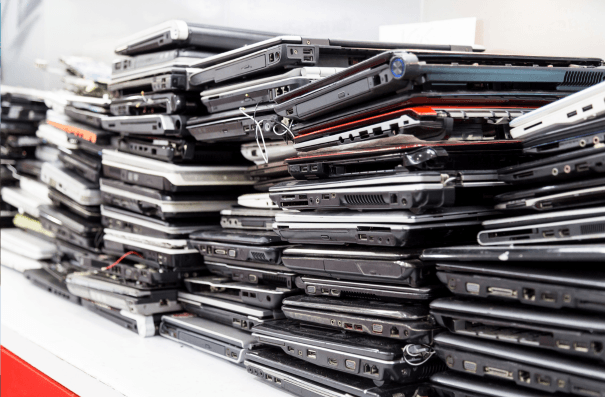

To evaluate secure data destruction when choosing an IT asset disposition (ITAD) provider, organizations should examine the provider's data sanitization standards, asset tracking practices, transportation procedures, facility security, and available documentation. They should also understand how the provider handles different storage devices and what options are available when standard data sanitization is not appropriate.
Retired computers, laptops, servers, and other business equipment can contain sensitive information long after they are removed from daily use. Simply deleting files or resetting a device does not necessarily mean that its data has been securely removed.
For Canadian organizations, this is an important part of responsible IT asset management. Financial institutions, healthcare organizations, municipalities, and other enterprises need to consider what happens to their equipment and the information stored on it throughout the disposal process.
Understanding the standards and procedures used by an ITAD provider can help organizations make more informed decisions before equipment leaves their premises.
Why Is Secure Data Destruction Important When Retiring IT Equipment?
Business devices can store considerably more information than users realize. Depending on the equipment and how it was used, retired assets may contain:
- Customer and employee information
- Financial and transaction records
- Internal business documents
- Healthcare and patient-related information
- System credentials and configuration data
- Business communications and other confidential files
When equipment is retired, this information does not automatically disappear. If storage media is reused, resold, recycled, or otherwise handled without appropriate data sanitization, information may remain accessible.
The risk is not limited to the original organization. Equipment may pass through multiple stages of collection, transportation, processing, refurbishment, and recycling. Organizations should therefore consider data security as part of the entire IT asset disposition process, not simply as a final step before equipment is removed.
What Is NIST SP 800-88 and How Does It Apply to ITAD?
One important reference when evaluating data sanitization practices is NIST Special Publication 800-88, published by the National Institute of Standards and Technology (NIST).
The publication provides guidance on media sanitization: the process of making access to data on storage media infeasible for a given level of effort.
NIST describes three broad sanitization categories:
| Method | What it means |
|---|---|
| Clear | Applies logical techniques to sanitize data while typically allowing the storage device to remain usable |
| Purge | Uses techniques designed to make data recovery infeasible using state-of-the-art laboratory techniques while potentially preserving the device for reuse |
| Destroy | Physically destroys the storage media so it can no longer be used for data storage |
The appropriate approach depends on factors such as the storage technology, the sensitivity of the information, the intended next use of the device, and the organization's security requirements.
These methods are not interchangeable in every situation. A suitable approach should be determined based on the media and the circumstances rather than assuming that one method works for every device.
For organizations evaluating ITAD providers, asking which sanitization standard or protocol is followed is a useful starting point. It is equally important to understand how the provider applies its approach to different types of equipment.
How Do You Evaluate an ITAD Provider's Data Sanitization Practices?
A provider's reference to a recognized standard is useful, but organizations should look beyond the name of the standard. They should understand how equipment is identified, transported, handled, and processed.
Here are several areas worth evaluating.
1. Asset Identification and Tracking
Organizations should understand how their equipment is identified throughout the ITAD process.
Serial numbers, asset tags, and other identifying information can help establish which devices have been collected and track their handling. This is particularly relevant when an organization retires a large number of devices across multiple offices or locations.
Ask the provider how assets are recorded and how equipment can be identified during processing.
2. Secure Transportation
Data security considerations begin before equipment reaches a processing facility.
Organizations should ask how retired assets are collected and transported, who is responsible for handling them, and how their movement is managed between the collection location and the processing facility.
Understanding the transportation process helps organizations assess how equipment is handled after it leaves their premises.
3. Processing Facility Security
The security of the facility where equipment is received and processed is another important consideration.
Organizations may want to understand:
- What security measures are in place at the facility?
- How is access to the facility managed?
- Is the facility subject to relevant quality or security management standards?
- How is equipment handled while awaiting processing?
The answers can help organizations understand the environment in which their retired assets are managed.
4. Data Sanitization Procedures
An ITAD provider should be able to explain its data sanitization approach and the standards or protocols it follows.
Organizations should ask how the provider determines the appropriate approach for different storage technologies and whether the process is suitable for the intended next use of the equipment.
It is also important to distinguish between a provider's stated sanitization procedure and evidence that a particular device has completed the process successfully.
5. Documentation and Accountability
Documentation can help organizations maintain internal records of retired equipment and its disposition.
Before selecting a provider, ask what information and documentation are available. Depending on the provider and the services involved, organizations may wish to understand whether records can identify the assets received, their processing status, and their final disposition.
The type and level of documentation available should be clarified before the engagement begins rather than assumed.
What Questions Should You Ask an ITAD Provider Before Handing Over Equipment?
A practical way to compare ITAD providers is to ask each one the same questions.
Use this checklist when evaluating potential partners:
- Which data sanitization standard or protocol do you follow?
Ask the provider to explain its approach and how it relates to the equipment being processed. - How are individual devices identified and tracked?
Understand whether serial numbers, asset tags, or other identifiers are recorded. - How is equipment transported from our premises to your processing facility?
Clarify how the provider manages collection and transportation. - What security measures are in place at the processing facility?
Ask about facility security and the standards or certifications that apply. - What documentation can you provide about the handling and disposition of our assets?
Establish what records will be available for your organization's internal requirements. - How do you determine the appropriate sanitization approach for different storage devices?
A provider should be able to explain how its approach accounts for different media and organizational requirements.
These questions can help organizations compare providers on more than price or collection convenience. They also establish expectations before equipment is transferred.
What Should Canadian Organizations Consider When Evaluating Data Destruction?
Canadian organizations should consider their own privacy obligations, internal information security policies, industry requirements, and the sensitivity of the data stored on retired equipment.
The appropriate approach may differ depending on the organization.
Financial services organizations may handle customer records, financial information, transaction data, and internal business information. They should consider how retired equipment is identified, tracked, and managed throughout the disposition process.
Healthcare organizations may have devices that contain patient-related information or other sensitive operational data. Their IT asset disposal processes should account for the sensitivity of this information and the organization's applicable privacy and records-management requirements.
Municipalities and public-sector organizations may manage equipment across multiple departments and locations. Consistent asset tracking and clear accountability can be particularly important when coordinating equipment retirement at scale.
There is no single disposal procedure that automatically meets every organization's requirements. Businesses should assess their own policies and obligations and make sure their ITAD provider can explain the practices relevant to their equipment and circumstances.
How Does Green4Good Approach IT Asset Security?
Green4Good provides IT asset disposition and lifecycle management services for organizations retiring business technology.
According to the company's published information, its approach includes several measures relevant to asset handling and data security:
- NIST-aligned data sanitization: Green4Good states that it wipes devices according to the NIST 800-88 data sanitization protocol.
- Asset tracking: The company tracks serial numbers and asset tags.
- Dock-to-dock transportation: Green4Good handles asset pickup and delivery.
- Processing facility security: Equipment is stored in ISO 9001-certified processing facilities with 24/7 surveillance.
These practices form part of the information organizations can consider when evaluating Green4Good as a potential ITAD provider.
To learn more about the company's services and approach, visit the Services page
Choosing an ITAD Provider Requires More Than a Data Wiping Promise
Secure data destruction is an important part of retiring business technology, but it should not be evaluated in isolation.
Organizations should consider the full process: how assets are identified, how equipment is transported, where it is processed, which sanitization standards are followed, and what documentation is available afterward.
A clear understanding of these practices can help businesses make more informed ITAD decisions, reduce uncertainty around retired equipment, and align asset disposition with their internal security and operational requirements.
For Canadian organizations, choosing a provider that can clearly explain its asset handling and data sanitization practices is an important step toward responsible IT asset management.
SHARE THIS POST